MBA College Admission Process A Comprehensive Guide
MBA College Admission Process is a journey filled with numerous steps, each crucial to shaping your future in the business world. Navigating through this intricate pathway requires awareness and preparation, as every component—from entrance exams to interviews—plays a significant role in your acceptance into a prestigious program. Understanding the nuances of this process can help you stand out among a sea of applicants, ensuring that your application reflects both your qualifications and aspirations.
In this guide, we will break down the essential stages of the MBA admission process, highlight eligibility criteria, entrance exams, application components, and more, ultimately providing you with a roadmap to succeed. Whether you’re contemplating your first application or looking to improve your chances, this overview aims to equip you with the knowledge needed for a successful admission experience.
Overview of MBA College Admission Process
The MBA college admission process is a structured pathway designed to evaluate prospective students and determine their eligibility for enrollment. It typically spans several months and involves multiple stages that require careful planning and execution. Understanding each step is crucial to crafting a successful application, allowing candidates to present themselves effectively and align with the expectations of admissions committees.The admission process generally consists of several key stages, each serving an important purpose in the overall evaluation of candidates.
From initial research to final enrollment, each step plays a vital role in ensuring that applicants are well-prepared and informed. Below is a breakdown of these stages along with their significance and timelines.
Key Stages of the MBA Admission Process, MBA College Admission Process
The following table Artikels the main phases of the MBA admission process, highlighting their timelines and significance:
| Stage | Timeline | Significance |
|---|---|---|
| Research and Selection of Colleges | 6-12 months before application deadlines | This stage is crucial for finding programs that align with career goals and personal interests, ensuring the right fit. |
| Preparing for Entrance Exams | 3-6 months before application deadlines | Standardized tests, such as the GMAT or GRE, are often required; strong scores can significantly enhance an application. |
| Application Preparation | 3-4 months before deadlines | This includes gathering transcripts, letters of recommendation, and crafting personal statements, all of which showcase the candidate’s qualifications. |
| Application Submission | 1-2 months before deadlines | Timely submission is essential; late applications may be disregarded, so adhering to deadlines is critical. |
| Interviews | 1-2 months after submission | Interviews provide an opportunity for candidates to express their motivations and interpersonal skills, crucial for business school success. |
| Admission Decisions | 1-2 months after interviews | Understanding acceptance offers and potential financial aid options is essential for making informed decisions. |
| Enrollment and Orientation | 1-2 months before program start | This final stage ensures students are prepared for their academic journey, integrating them into the school community. |
“The MBA admission process requires planning, dedication, and strategic preparation to secure a place in a competitive program.”
Eligibility Criteria
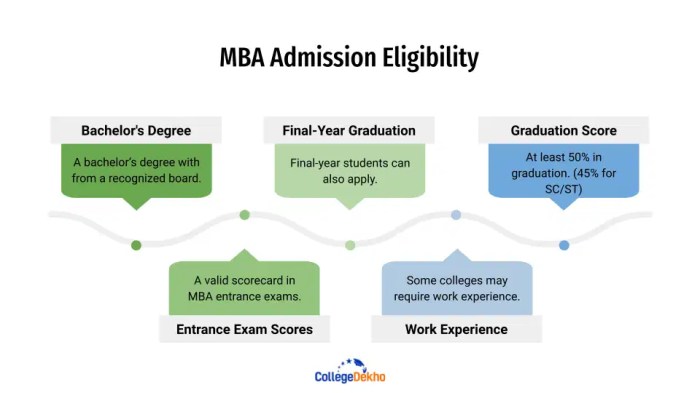
When considering an MBA program, it’s essential to understand the eligibility criteria that most colleges require from applicants. These criteria serve as a benchmark to assess the qualifications and readiness of candidates for the rigorous demands of an MBA education. While specific requirements may vary from one institution to another, there are common standards that provide a clear framework for prospective students.A solid academic background and relevant professional experience are crucial components of the eligibility criteria for MBA programs.
Most colleges look for candidates who possess not only a bachelor’s degree but also a proven track record of leadership and achievement in their professional life. This combination helps ensure that students are ready to engage in advanced business studies and contribute meaningfully to classroom discussions.
Common Academic Qualifications
Academic qualifications are foundational to the MBA admission process. Most colleges require applicants to have completed a bachelor’s degree from an accredited institution. Some institutions might also have minimum GPA requirements, often around 3.0 on a 4.0 scale, to ensure quality among prospective candidates. Additionally, many programs accept students from a diverse range of undergraduate disciplines, including business, engineering, liberal arts, and sciences, allowing for a rich blend of perspectives in the classroom.
Professional Experience Requirements
Professional experience plays a vital role in the MBA admissions process. Candidates are generally expected to have a few years of full-time work experience, typically ranging from two to five years, depending on the program. This experience is not just a number; it must demonstrate relevant leadership potential, initiative, and a capacity for professional growth.
Examples of Prerequisites
Before applying, prospective MBA students should ensure they meet a range of prerequisites that enhance their application. These may include:
- Standardized Test Scores: Many programs require GMAT or GRE scores to assess analytical and verbal skills. A competitive score can significantly bolster an application.
- Letters of Recommendation: Strong endorsements from supervisors or academic mentors who can vouch for the candidate’s abilities and character are often necessary.
- Personal Statement or Essays: Applicants must convey their motivations for pursuing an MBA, career goals, and what they hope to contribute to the program.
- Interview: Some colleges may require an interview as part of the selection process, providing an opportunity for candidates to showcase their personality and fit for the program.
“A well-rounded application reflects not only academic readiness but also personal and professional capability.”
Understanding and fulfilling these eligibility criteria is essential for prospective MBA students to enhance their chances of acceptance into their desired programs. By aligning their qualifications with the expectations of academic institutions, candidates can not only improve their admission prospects but also set the stage for a successful MBA journey.
Entrance Exams
The entrance exam is a pivotal part of the MBA admission process, serving as a standardized measure of the applicants’ readiness for graduate-level business education. Many business schools require candidates to take a recognized entrance exam to evaluate their analytical, quantitative, and verbal skills. Among the most popular exams are the GMAT (Graduate Management Admission Test) and GRE (Graduate Record Examination), each with distinct formats and scoring systems that can significantly impact an applicant’s prospects.
Understanding the differences between these exams is essential for prospective MBA students, as it influences their preparation strategies and selection of schools. The GMAT is specifically designed for business school applicants, while the GRE is more general and can be used for various graduate programs. Each exam has its unique scoring system and format, which can cater to different strengths of applicants.
Comparison of Entrance Exams
The table below illustrates a comparison between the GMAT and GRE, detailing their formats, scoring systems, and other critical elements that can affect a candidate’s choice of which exam to take.
| Feature | GMAT | GRE |
|---|---|---|
| Purpose | Designed for MBA admissions | Graduate admissions across various disciplines |
| Sections | 1. Analytical Writing 2. Integrated Reasoning 3. Quantitative 4. Verbal |
1. Analytical Writing 2. Verbal Reasoning 3. Quantitative Reasoning |
| Duration | 3 hours 30 minutes | 3 hours 45 minutes |
| Scoring Range | 200 – 800 | 260 – 340 |
| Score Distribution | Verbal and Quantitative sections scored from 0 to 60, Analytical Writing and Integrated Reasoning separately scored from 0 to 6 and 1 to 8 respectively | Verbal and Quantitative sections scored from 130 to 170, with 0 to 6 for Analytical Writing |
| Weighted Importance | High emphasis in most MBA admissions | Some MBA programs accept GRE scores but may place less weight on them |
As highlighted, the GMAT is tailored specifically for business schools, making it the preferred choice for many applicants. However, the GRE offers flexibility for those considering multiple graduate programs. Understanding these differences can help applicants make informed decisions about which exam to take based on their individual strengths and career goals.
Choosing the right entrance exam is crucial, as it can significantly impact your MBA application and future opportunities.
Application Components
The MBA application process is comprehensive, involving several critical components that collectively present your candidacy to admissions committees. A strong application not only showcases your academic achievements but also your personality, aspirations, and fit for the program. Understanding these components is essential for crafting an impactful application.One of the most important elements is the application essays, which allow candidates to express their thoughts, experiences, and motivations in a personal way.
Personal statements and recommendation letters also play crucial roles in providing insights into your character and potential. Each of these components is evaluated closely, as they contribute significantly to the overall assessment of your application.
Essays and Recommendations
Essays are a chance for applicants to delve deeper into their backgrounds, career goals, and reasons for pursuing an MBA. They provide the admissions committee with context that raw statistics, such as GPA and test scores, cannot convey. Similarly, recommendation letters serve as endorsements from individuals who can attest to your abilities and character, adding depth to your application.Personal statements are particularly influential, as they articulate your journey, aspirations, and what you hope to achieve through the MBA program.
A well-crafted personal statement can differentiate you from other candidates by highlighting your unique experiences and perspectives.When writing application essays, consider the following tips to craft strong submissions:
- Be Authentic: Write in your own voice and reflect your true self. Authenticity resonates with readers.
- Stay Focused: Address the prompt directly and ensure that your essay remains relevant throughout.
- Show, Don’t Just Tell: Use anecdotes and specific examples to illustrate your points and make your story engaging.
- Keep it Concise: Respect word limits and avoid unnecessary fluff; clarity and precision are vital.
- Proofread and Edit: Ensure there are no grammatical errors or typos, as attention to detail is crucial.
- Seek Feedback: Get input from mentors or peers who can provide constructive criticism and perspective.
- Align with Program Values: Research the MBA program and reflect how your goals align with their mission and culture.
Interview Process
The interview process is a crucial component of the MBA admissions journey, allowing candidates to showcase their personality, motivations, and alignment with the program. Typically, interviews are conducted by admissions committees, faculty members, or alumni, and they serve as an opportunity for both the candidate and the school to assess fit. Candidates should prepare effectively to maximize their chances of success during interviews.
Preparation involves understanding the program’s values, reflecting on personal experiences, and being ready to articulate career goals and contributions to the school community.
Preparation Strategies
Effective preparation for MBA interviews can significantly enhance a candidate’s performance. Here are some key strategies to consider:
- Research the Program: Familiarize yourself with the school’s culture, curriculum, and notable alumni to tailor your responses.
- Practice Common Questions: Conduct mock interviews to build confidence and refine your answers.
- Reflect on Your Experiences: Identify key achievements and challenges, and be ready to discuss them in detail.
- Prepare Questions: Develop thoughtful questions to ask the interviewer, indicating your genuine interest in the program.
- Dress Professionally: Choose appropriate attire that reflects your commitment to making a great impression.
Common Interview Questions
Interviewers often ask similar questions to assess candidates’ qualifications and character. Below is a table of common interview questions that candidates may encounter:
| Question | Purpose |
|---|---|
| Tell me about yourself. | To understand your background and motivations. |
| Why do you want to pursue an MBA? | To gauge your career aspirations and goals. |
| What are your strengths and weaknesses? | To assess self-awareness and honesty. |
| Describe a leadership experience. | To evaluate leadership skills and teamwork. |
| Where do you see yourself in five years? | To understand your long-term career vision. |
| Why this program? | To determine fit and knowledge of the program. |
Thorough preparation can transform the interview from a daunting task into an empowering experience that highlights your readiness for the challenges of an MBA program.
Financial Considerations

Source: careermudhra.com
Pursuing an MBA involves a considerable financial investment. Understanding the costs associated with this decision is crucial for prospective students as they plan their educational journey. This section delves into the various financial aspects of an MBA program, focusing on tuition, fees, and funding options.One of the significant expenses that students must consider is tuition and associated fees. The cost of an MBA can vary widely depending on the institution, location, and program format.
On average, tuition can range from $30,000 to over $120,000 for a two-year program. Additionally, students should account for other expenses such as textbooks, resources, and living costs, which can further increase the overall budget.
Funding Options
There are several funding options available to help students manage the costs of their MBA education. Understanding these options can make a significant difference in affording the program while minimizing debt.Financial aid is often a crucial component of funding an MBA. Scholarships, grants, and loans are commonly sought after by students. Scholarships can be merit-based, need-based, or awarded for specific demographics or achievements.
Many institutions offer their own scholarships, which can significantly reduce tuition costs.Student loans are another prevalent funding option, which can come from federal or private lenders. Federal loans often offer lower interest rates and more flexible repayment options compared to private loans. It is essential for students to research and apply for loans early in the admission process, as federal loan programs have specific deadlines.
“On average, MBA graduates can expect to earn a salary increase of 50% post-graduation compared to their pre-MBA income.”
In addition to scholarships and loans, some employers offer tuition reimbursement programs for employees pursuing further education. This can relieve financial pressure and provide additional incentives for career advancement. Students should also consider the financial implications of their career choices post-MBA. Certain industries may offer higher starting salaries, which can help offset the cost of education. Researching average salaries in various fields can guide students in their decision-making process.Overall, the financial considerations of pursuing an MBA are multifaceted.
Understanding tuition costs, available funding options, and potential return on investment is essential for making informed decisions about this significant educational endeavor.
Admission Notifications and Decision Making
The admission notification process is a crucial aspect of the MBA college admission journey, marking the culmination of months of hard work and preparation. Understanding the timeline and the types of decisions applicants can expect can help ease anxiety and set realistic expectations as you await critical feedback from your chosen institutions.The timeline for admission notifications varies significantly based on the institution and their specific cycles.
Generally, applicants can expect to receive notifications anywhere from a few weeks to several months after submitting their applications. Many schools typically announce their decisions in rounds, which allows for a structured timeline. For instance, if you apply in Round 1, decisions might be communicated by late December or early January, while Round 2 results could come out in February or March.
It’s essential to stay informed about the specific dates provided by each school, as they often publish their admission calendars on their websites.
Types of Admission Decisions
Understanding the various types of admission decisions can empower applicants to manage their expectations and responses effectively. Here are the common outcomes one might encounter:
- Acceptance: This is the most favorable outcome, indicating that you have been offered a place in the program. Accepted students usually receive formal communication and may need to confirm their acceptance within a specific timeframe.
- Waitlist: Being placed on a waitlist means that while you weren’t initially selected, you are still in contention for a spot. Institutions often provide details on how many candidates are on the waitlist and the likelihood of receiving an offer later.
- Rejection: Unfortunately, not every applicant will receive an acceptance. Rejections are final, but it’s essential to view them as opportunities for growth and reflection on your application strategy.
“An acceptance is a reason to celebrate, while a waitlist can signal potential opportunities still ahead.”
Strategies for Handling Admission Outcomes
Encountering different admission outcomes requires emotional resilience and strategic planning. Here are some effective strategies to handle each scenario:
- If Accepted: Celebrate your success! Take time to review your options, considering factors like financial aid, program details, and personal goals before making your decision.
- If Waitlisted: Engage with the admissions office to express your continued interest. Submitting additional materials, such as updated test scores or letters of recommendation, can strengthen your position.
- If Rejected: Allow yourself to feel disappointed but focus on constructive feedback. Consider reaching out for insights on your application and focus on other schools where you might thrive. Take this experience to refine your approach for future applications.
By staying organized and proactive, applicants can navigate the admission process with confidence, regardless of the outcome. Each step provides valuable lessons that contribute to personal and professional growth.
Tips for a Successful Application
Source: collegedekho.com
Crafting a standout MBA application requires careful planning, attention to detail, and a strategic approach. The admissions process is highly competitive, and presenting yourself in the best light can significantly impact your chances of acceptance. It’s essential to understand the components of the application and how to optimize each part to showcase your strengths effectively.
Building relationships with admissions teams and networking can play a crucial role in the application process. Engaging with the school community and demonstrating your genuine interest can enhance your application and provide insights that are not readily available through standard channels. Below is a list of best practices and tips to consider during your MBA application journey.
Best Practices for MBA Applications
A well-organized application reflects your professionalism and commitment. The following tips can help you create an impressive MBA application:
| Tip | Description |
|---|---|
| Understand Program Fit | Research each program thoroughly to ensure it aligns with your career goals and values. |
| Craft a Compelling Personal Statement | Your personal statement should reflect your unique journey, career aspirations, and why you are a good fit for the program. |
| Gather Strong Letters of Recommendation | Select recommenders who know you well and can speak to your strengths and accomplishments relevant to the MBA. |
| Prepare for Standardized Tests | Invest time in preparing for entrance exams like the GMAT or GRE to achieve a competitive score. |
| Highlight Relevant Experience | Detail your professional experiences, leadership roles, and achievements that relate to your desired MBA focus. |
| Polish Your Resume | Keep your resume concise, focusing on accomplishments, responsibilities, and skills relevant to your MBA aspirations. |
| Network with Alumni and Current Students | Connecting with alumni and current students can provide valuable insights and strengthen your application through personal connections. |
The strength of your application lies not just in statistics, but in the story you tell about your aspirations and character.
Networking is a powerful tool in the MBA application process. Establishing connections with the admissions team, faculty, and current students can provide a clearer picture of the program and help you stand out in the crowd. Engaging in campus events, webinars, or information sessions can also demonstrate your commitment and enthusiasm for the program.
Taking the time to follow these best practices will not only enhance your application but also provide you with a sense of confidence as you navigate the admission process. Preparing a thoughtful and strategic application can lead you toward the MBA program that best fits your future goals.
Common Mistakes to Avoid

Source: mangalmay.org
Navigating the MBA admission process can be challenging, and applicants often encounter various pitfalls that can significantly impact their chances of success. Understanding these common mistakes is vital for crafting a strong application and avoiding unnecessary setbacks.Applicants frequently fall prey to oversights that range from minor errors to major missteps. For instance, neglecting to thoroughly research the programs can lead to mismatches in expectations and ultimately result in poorly tailored applications.
Additionally, overlooking deadlines or failing to prepare adequately for interviews can diminish the chances of securing a spot in a coveted program.
Frequent Pitfalls in Applications
To illuminate the most common mistakes, here are some examples along with actionable advice to help applicants stay on track:
- Generic Personal Statements: Writing a one-size-fits-all personal statement can make applicants seem uninterested or lazy. Tailor your statement to reflect your unique experiences and reasons for choosing each specific program.
- Ignoring Application Guidelines: Failing to follow specific instructions regarding word count, format, or required documents can lead to disqualification. Always double-check the application requirements for each program.
- Last-Minute Submissions: Rushing to submit applications at the last moment often results in avoidable mistakes. Plan ahead and give yourself ample time to review your application thoroughly.
- Neglecting Recommendations: Not communicating effectively with recommenders or failing to provide them with necessary information can lead to weak or generic letters. Choose recommenders who know you well and can speak to your strengths.
- Underestimating Interview Preparation: A lack of preparation for interviews may result in poor performance. Practice common interview questions and develop clear, concise responses that showcase your qualifications and motivations.
By being aware of these pitfalls and taking proactive steps to avoid them, applicants can enhance their chances of standing out and securing admission to their desired MBA programs. Each point listed above serves as a reminder to approach the application process with diligence and attention to detail.
Final Wrap-Up: MBA College Admission Process
In summary, mastering the MBA College Admission Process involves a clear understanding of each step, from meeting eligibility requirements to effectively presenting your application. By being mindful of the common pitfalls and adhering to best practices, you can enhance your chances of acceptance into your desired program. As you embark on this exciting journey, remember that preparation and persistence are key to unlocking the doors to your future in business.
FAQ Resource
What are the typical eligibility requirements for MBA programs?
Eligibility often includes a bachelor’s degree, a minimum GPA, and relevant work experience, though specific requirements can vary by institution.
How important are entrance exam scores in the admission process?
Entrance exam scores, such as GMAT or GRE, are crucial as they demonstrate your analytical skills and academic readiness for graduate-level coursework.
What should I include in my application essays?
Your essays should reflect your motivations, career goals, and personal experiences, showcasing your unique perspective and commitment to pursuing an MBA.
How can I effectively prepare for MBA interviews?
Research the program, practice common interview questions, and prepare to discuss your experiences and goals clearly and confidently.
What funding options are available for MBA students?
Funding options can include scholarships, grants, student loans, and employer sponsorship programs to help cover tuition costs.