MBA For Career Growth Enhancing Your Professional Journey
MBA For Career Growth opens the door to a world of opportunities, allowing professionals to enhance their skills and position themselves for success in a competitive job market. This advanced degree not only equips individuals with essential business acumen but also fosters leadership qualities that are increasingly valued across various industries.
As more companies seek leaders who can navigate complex challenges, an MBA becomes a critical asset for career advancement. It enriches your professional toolkit, aligns you with market demands, and connects you with influential networks that can shape your career trajectory.
Importance of an MBA for Career Advancement

Source: careerprotocol.com
An MBA is often viewed as a crucial stepping stone for professionals aiming to elevate their careers. This advanced degree not only provides specialized knowledge in business management but also equips individuals with the skills needed to navigate the complexities of today’s corporate landscape. The value of an MBA extends beyond mere academic credentials; it encompasses a broad range of benefits that significantly enhance career prospects.An MBA program enhances professional skills in various ways, including critical thinking, analytical reasoning, and effective communication.
Graduates are trained to approach problems strategically, making them valuable assets in any organizational setting. Furthermore, the collaborative nature of MBA programs fosters teamwork and networking opportunities that are essential in the business world. This combination of skill enhancement and networking can lead to accelerated career growth and opportunities that may not have been accessible otherwise.
Role of MBA in Leadership Opportunities
The significance of an MBA in fostering leadership skills cannot be overstated. Many organizations actively seek MBA graduates for their ability to lead teams and projects, demonstrating strategic thinking and decision-making capabilities. MBA programs often include case studies, simulations, and leadership workshops that prepare students for real-world challenges. These programs emphasize the development of soft skills, such as emotional intelligence and conflict resolution, which are critical for effective leadership.
As a result, MBA graduates often find themselves in leadership roles across various industries, from finance to healthcare.
Potential Salary Increase Associated with an MBA
Obtaining an MBA can lead to substantial increases in earning potential. Statistics from various studies indicate that individuals with an MBA can expect to see a significant salary boost compared to their peers without this degree. For example, a Graduate Management Admission Council (GMAC) survey shows that MBA graduates can earn, on average, over $20,000 more annually than those with only a bachelor’s degree.
This financial advantage can be even more pronounced in executive positions, where an MBA is often viewed as a prerequisite.
“An MBA is not just a degree; it’s an investment in your future earning potential.”
In many cases, organizations are willing to pay a premium for MBA graduates due to their enhanced skill set and leadership capabilities. As professionals accumulate experience and responsibilities, the gap in salary between MBA holders and non-MBA holders tends to widen, making it a worthwhile consideration for anyone serious about advancing their career.
MBA Specializations and Their Impact on Career Growth

Source: careerprotocol.com
Choosing the right MBA specialization can significantly shape your career trajectory. With the world of business evolving rapidly, understanding which specialization aligns with your career aspirations and market demands is essential. This section explores popular MBA specializations and their relevance, compares general versus specialized MBAs, and examines how certain fields are in sync with current market trends.
Popular MBA Specializations and Their Career Relevance
There are several MBA specializations that cater to diverse career paths, each offering unique insights and advantages. Here’s a look at some of the most sought-after specializations along with their relevance:
- Finance: This specialization is perfect for those aiming for careers in investment banking, financial analysis, or corporate finance. The finance sector continues to grow, with roles in financial technology (fintech) becoming increasingly popular.
- Marketing: An MBA in marketing equips professionals for roles in brand management, digital marketing, and market research. As companies shift focus to online platforms, the demand for marketing specialists who understand digital strategies is on the rise.
- Human Resources: Specializing in HR prepares graduates for roles in talent management, organizational development, and employee relations. With the emphasis on workplace culture and employee engagement, skilled HR professionals are in high demand.
- Operations Management: This specialization focuses on supply chain management, logistics, and quality control. As businesses aim for efficiency, experts in operations are vital for optimizing processes and reducing costs.
- Entrepreneurship: Ideal for aspiring business owners, this specialization provides insights into startup management, innovation, and venture capital. With the surge in startups, entrepreneurs with an MBA are better equipped to navigate challenges.
Benefits of General MBA Versus Specialized MBA
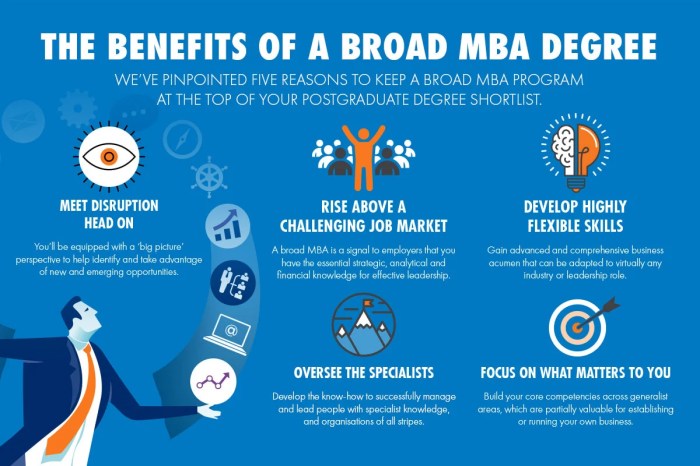
When considering an MBA, one must weigh the advantages of a general MBA against a specialized MBA. A general MBA offers a broad overview of various business disciplines, equipping graduates with versatile skills applicable across numerous sectors. This makes it suitable for individuals seeking flexible roles or those who may change industries.On the other hand, a specialized MBA dives deeper into specific areas, providing in-depth knowledge and skills that can set candidates apart in competitive job markets.
Specializations often reflect current trends and demands, enhancing employability in niche sectors.
“Specialized MBAs can provide a competitive edge in industries where expertise is crucial for career advancement.”
Alignment of Specializations with Market Demands
Certain MBA specializations are increasingly aligning with market demands, responding to technological advancements and shifts in consumer behavior. For instance, the rise of big data analytics has led to growing interest in specializations related to data analytics and information systems. Professionals with skills in data-driven decision-making are highly sought after.Additionally, sustainability and corporate social responsibility are becoming critical for businesses.
This has led to a surge in demand for specializations in sustainable business practices. Companies are looking for leaders who can integrate sustainability into their business models, offering a unique advantage to graduates in this field.Overall, selecting the right MBA specialization not only enhances career prospects but also positions individuals to meet the evolving needs of the job market effectively.
Networking Opportunities through MBA Programs
MBA programs are not just about acquiring knowledge; they are gateways to vast networking opportunities that can significantly enhance career growth. Through various interactions, events, and collaborations, MBA students get to connect with fellow students, faculty, industry experts, and alumni, creating a rich tapestry of professional relationships that can prove invaluable throughout their careers.The networking advantages provided by MBA programs can transform how individuals approach their career paths.
Students have the chance to engage with peers from diverse backgrounds, which leads to the exchange of ideas and experiences. Additionally, many programs host networking events, conferences, and guest speaker sessions, enabling students to meet influential leaders from various industries. This exposure not only broadens their understanding of different fields but also opens doors to potential job opportunities.
Influence of Alumni Networks on Career Trajectories
Alumni networks play a crucial role in shaping the career trajectories of MBA graduates. These networks serve as platforms where former students can share job opportunities, mentorship, and industry insights. The strength and activity of an alumni network can create an environment of support where members help one another navigate the complexities of their respective fields.Alumni connections often lead to valuable introductions that can enhance career prospects.
For instance, many companies prefer to hire candidates who come recommended by their existing employees, and having a connection within the organization can significantly improve chances of securing an interview. To illustrate the impact of networking through MBA alumni connections, here is a table showcasing successful professionals who leveraged their MBA connections to advance their careers:
| Name | Current Position | Company | MBA School |
|---|---|---|---|
| Satya Nadella | CEO | Microsoft | University of Chicago – Booth School of Business |
| Sheryl Sandberg | Former COO | Harvard Business School | |
| Indra Nooyi | Former CEO | PepsiCo | Yale School of Management |
| Tim Cook | CEO | Apple | Duke University – Fuqua School of Business |
These individuals exemplify how strategic networking during their MBA programs contributed to their career advancements and accomplishments. By tapping into their alumni networks, they were able to cultivate relationships that played a significant role in their professional journeys.
Skills Development in MBA Programs
MBA programs are designed not just to impart theoretical knowledge, but also to develop a robust set of skills that are crucial for career advancement. The curriculum incorporates a blend of hard skills, such as quantitative analysis and financial modeling, alongside soft skills like leadership and communication. This dual focus ensures that graduates are well-equipped to tackle the complexities of the modern business environment.
The skills development aspect of an MBA can significantly enhance employability and prepare students for high-level positions in diverse fields.
Key Skills Developed through an MBA Curriculum
MBA curricula foster a variety of essential skills that are applicable across different industries. The following are some key skills that are typically honed during an MBA program:
- Strategic Thinking: Courses such as strategic management encourage students to analyze competitive environments and develop long-term plans for business success.
- Data Analysis: Programs often include quantitative courses that teach students to interpret data and make data-driven decisions.
- Financial Acumen: Classes in finance equip students with the knowledge to evaluate investments and understand financial statements, crucial for managerial roles.
- Leadership: Group projects and team-based learning foster leadership qualities, as students must collaborate and lead teams towards shared goals.
- Effective Communication: Presentations and negotiation simulations refine verbal and written communication skills, vital for articulating ideas and influencing stakeholders.
Projects and Courses Enhancing Strategic Thinking Abilities
Strategic thinking is a pivotal skill developed through various projects and courses in an MBA program. One notable example is the capstone project, where students are tasked with developing a comprehensive business strategy for a real or simulated company. This project typically requires extensive market research, competitive analysis, and the formulation of actionable plans to achieve specific business objectives. Additionally, case study analyses are integral to many MBA courses, allowing students to dissect real-life business scenarios and propose strategic solutions.
Importance of Soft Skills Cultivated in MBA Programs
Soft skills are often the differentiating factor in career success. MBA programs place significant emphasis on developing these skills through collaborative projects, leadership training, and interactive workshops. Here are some critical soft skills nurtured during the program:
- Emotional Intelligence: Understanding and managing emotions in oneself and others can lead to better teamwork and conflict resolution.
- Adaptability: The dynamic nature of MBA coursework prepares students to be flexible and open to change in fast-paced business environments.
- Networking: Opportunities to connect with peers, alumni, and industry leaders enhance relationship-building skills, essential for career advancement.
- Critical Thinking: The ability to evaluate information and make informed decisions is cultivated through discussions, debates, and analytical assignments.
“The skills developed during an MBA program not only enhance professional qualifications but also empower individuals to navigate and lead in complex business landscapes.”
Online and Part-Time MBA Options
For many working professionals, pursuing an MBA can seem daunting, especially when balancing job responsibilities and personal commitments. Thankfully, online and part-time MBA programs offer flexible options that cater to the needs of busy individuals. These programs enable students to enhance their skills and credentials while still maintaining their full-time jobs, making them an attractive choice for career advancement.The effectiveness of different learning modes can significantly influence career growth.
Online MBA programs often provide a self-paced learning environment, allowing students to manage their schedules effectively. Part-time options typically involve evening or weekend classes, which can complement a full-time job. Both formats offer unique benefits, making them valuable paths for those looking to elevate their careers without putting their lives on hold.
Advantages of Online and Part-Time MBAs
Online and part-time MBA programs come with several advantages that specifically benefit working professionals. These benefits include:
- Flexibility: Students can study at their own pace or attend classes during convenient hours, making it easier to balance work and education.
- Access to a global network: Online programs often attract a diverse cohort of students from various backgrounds and industries, broadening networking opportunities.
- Cost-effective: Online and part-time programs can be more affordable compared to traditional full-time MBAs, allowing students to save on commuting and accommodation costs.
- Immediate application of knowledge: Professionals can apply what they learn in real-time at their jobs, reinforcing their education with practical experience.
- Variety of specializations: Many online and part-time programs offer a range of specializations that can be tailored to fit specific career goals.
Reputable Online MBA Programs with Flexible Schedules, MBA For Career Growth
Selecting a reputable online MBA program is crucial for ensuring a valuable educational experience. Below is a list of recognized online MBA programs that offer flexible schedules for working professionals:
- Carnegie Mellon University – Tepper School of Business: Known for its strong emphasis on analytics and leadership, this program offers flexibility through online and hybrid options.
- University of North Carolina at Chapel Hill – Kenan-Flagler Business School: This program features a robust online curriculum with strong networking opportunities and a focus on leadership skills.
- Indiana University – Kelley School of Business: With a highly customizable curriculum, Kelley’s online MBA allows students to choose courses that align with their career goals.
- Auburn University – Harbert College of Business: Offers a fully online MBA with concentrations in areas such as project management and healthcare management.
- Penn State University – Smeal College of Business: This program emphasizes strategic management and offers a range of elective courses to tailor the MBA experience.
“Online and part-time MBA programs empower working professionals to enhance their credentials and skills while balancing career and personal commitments.”
Industry Trends Influencing MBA Relevance: MBA For Career Growth
The landscape of business is constantly evolving, and understanding industry trends is crucial for MBA graduates aiming for career advancement. As the workplace adapts to new technologies and market demands, the importance of an MBA is being reshaped. The skills and knowledge acquired through MBA programs are increasingly aligned with emerging trends, making them more relevant than ever.Workplace dynamics are shifting due to factors such as globalization, digital transformation, and the rise of remote work.
These trends are influencing the value of an MBA by highlighting the need for adaptable leadership and innovative problem-solving skills. Staying updated with industry changes is essential for MBA students, as it allows them to tailor their learning experience to meet current demands.
Industries Positively Impacted by MBA Graduates
Understanding which industries are benefiting the most from MBA graduates can provide insight into career opportunities and growth potential. MBA programs equip graduates with strategic thinking, leadership capabilities, and a comprehensive understanding of business operations. The following industries have shown a strong positive impact from the infusion of MBA talent:
- Technology: Rapid advancements in technology require leaders who can navigate complex digital landscapes and drive innovation.
- Healthcare: The evolving healthcare landscape demands professionals who understand both operational efficiency and patient care management.
- Finance: The financial sector thrives on strategic decision-making and risk management, areas where MBA graduates excel.
- Consulting: Consulting firms seek out MBA holders for their problem-solving skills and strategic insight, essential in advising businesses.
- Consumer Goods: With changing consumer preferences, businesses in this sector benefit from the marketing and operational expertise of MBAs.
- Energy: As the world shifts towards sustainable energy solutions, MBAs are crucial in strategizing and managing this transition.
- Education: Educational institutions are increasingly valuing MBA graduates capable of implementing innovative management practices.
In an era where business challenges require quick and informed responses, MBA graduates are well-positioned to lead the charge. Their ability to adapt and apply their knowledge to real-world problems is what makes them invaluable across these industries.
Financial Considerations of Pursuing an MBA
Investing in an MBA program is a significant financial commitment that requires careful consideration. The costs associated with obtaining an MBA can vary widely depending on the institution, program format, and geographical location. Understanding these financial implications is essential for prospective students who aim to enhance their career opportunities through advanced education.The financial investment required for an MBA program typically includes tuition fees, books, materials, and living expenses.
Tuition fees can range from several thousand to over a hundred thousand dollars at prestigious universities. It’s crucial to evaluate the potential return on investment (ROI), which can be measured by the increase in salary and career advancement opportunities post-MBA. Graduates often see significant salary increases, with many reporting returns that outweigh their initial investment within a few years of graduation.
Tuition Costs Among Top MBA Programs
The landscape of MBA program costs varies widely among top institutions. A detailed comparison of tuition fees can provide prospective students with a clearer picture of their financial commitment. The following table highlights the tuition costs from some of the leading MBA programs in the United States:
| University | Tuition Cost (Approx.) |
|---|---|
| Harvard Business School | $73,440 |
| Stanford Graduate School of Business | $76,104 |
| Wharton School, University of Pennsylvania | $83,230 |
| MIT Sloan School of Management | $79,000 |
| Columbia Business School | $82,000 |
In addition to tuition, students should also consider the financial impact of living expenses, travel for internships, and networking events. These factors can add significant costs to the overall investment in an MBA. When assessing ROI, it’s important to consider average salary increases among graduates. For example, according to data from the Graduate Management Admission Council (GMAC), MBA graduates can expect a median starting salary of around $115,000, with many reporting substantial increases from their pre-MBA earnings.
“Investing in an MBA can yield a transformative return in career trajectory, often leading to salary increases that far exceed initial educational costs.”
Overall, while the financial considerations of pursuing an MBA can appear daunting, the potential for salary advancement and career growth makes it a worthwhile investment for many individuals aiming to make a significant impact in their professional lives.
Outcome Summary

Source: technoticia.com
In conclusion, pursuing an MBA is a strategic move for anyone looking to elevate their career. The combination of skill development, networking opportunities, and the potential for increased earning power makes it a worthy investment. Embracing the journey of an MBA can lead to significant career growth and open doors to new possibilities.
Clarifying Questions
How long does it take to complete an MBA?
Typically, full-time MBA programs take about two years, while part-time or online programs may vary from one to three years depending on the schedule.
Is an MBA worth the investment?
Many graduates see a substantial return on investment through higher salaries and advancement opportunities, making it a valuable asset for career growth.
Can I pursue an MBA while working full-time?
Yes, many MBA programs offer flexible schedules or online options that accommodate working professionals.
What are the most popular MBA specializations?
Common specializations include finance, marketing, entrepreneurship, and supply chain management, each aligning with specific career paths.
How important is networking in an MBA program?
Networking is crucial, as connections made during an MBA can lead to job opportunities, mentorship, and professional growth.