MBA Course Details And Fees Unveiled for You
MBA Course Details And Fees is the key to unlocking new career opportunities and advancing your professional journey in today’s dynamic job market. With an MBA, not only do you enhance your skill set, but you also open the door to a wealth of networking possibilities and career advancements. From understanding the structure of various MBA programs, whether full-time, part-time, or online, to exploring the core subjects that shape future leaders, this guide aims to provide an insightful overview of what to expect when delving into the world of MBA education.
In addition to outlining the admission requirements, specializations, and financial considerations, we will also take a closer look at what makes MBA programs appealing across the globe. Whether you’re contemplating enrollment or simply curious about the costs involved, this comprehensive overview will equip you with valuable knowledge to make informed decisions.
Overview of MBA Courses
An MBA (Master of Business Administration) is a significant educational achievement that carries substantial weight in today’s competitive job market. As businesses continue to evolve and adapt to new technologies and global challenges, the demand for skilled leaders and strategic thinkers has never been higher. An MBA equips individuals with the necessary tools to navigate complex business environments, making them valuable assets to employers.MBA programs are designed to accommodate various lifestyles and career goals, offering different structures to fit the needs of aspiring business leaders.
These options typically include full-time, part-time, and online formats. Each format provides unique advantages, catering to current professionals or those entering the workforce for the first time.
Program Structures and Formats
Understanding the different structures of MBA programs helps prospective students make informed decisions based on their personal and professional circumstances. The main formats include:
- Full-Time MBA: This traditional format is ideal for individuals looking to immerse themselves in their studies without the distraction of a job. Typically lasting two years, it allows for an in-depth exploration of business concepts and often includes internships or practical experiences.
- Part-Time MBA: Designed for working professionals, this format permits students to balance their job responsibilities with their studies. Classes are usually held during evenings or weekends, enabling students to apply what they learn in real-time at their workplaces.
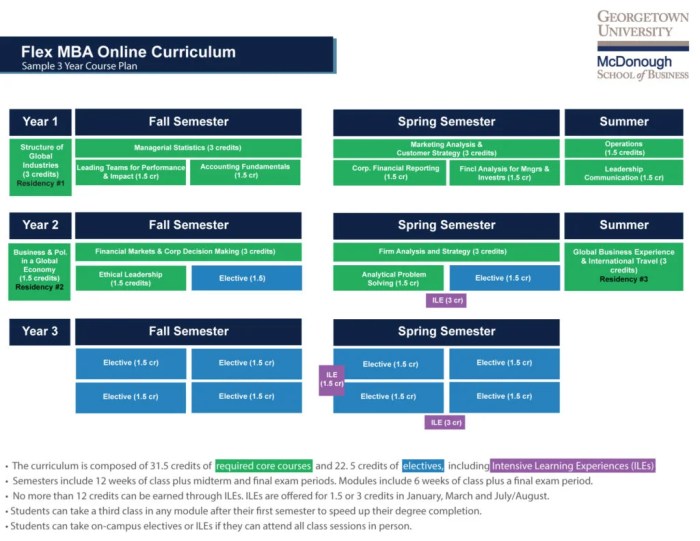
- Online MBA: A flexible alternative, the online MBA allows students to complete coursework at their own pace, making it suitable for those with demanding schedules. This format offers access to a wide range of resources and interactive platforms, fostering a collaborative learning environment.
Core Subjects in MBA Curricula
MBA programs typically include a range of core subjects that provide foundational knowledge crucial for business leadership. These subjects are often structured to foster critical thinking, analytical skills, and practical problem-solving abilities. Here are common core subjects found in MBA curricula:
- Accounting: Understanding financial statements and the principles of accounting is vital for making informed business decisions.
- Finance: This subject covers investment strategies, capital management, and financial markets, equipping students to navigate complex financial landscapes.
- Marketing: Students learn about consumer behavior and strategies for effectively promoting products and services to targeted markets.
- Operations Management: This area focuses on the production and delivery of goods and services, emphasizing efficiency and quality management.
- Human Resource Management: Topics include recruitment, training, and employee development, vital for managing an organization’s most important asset—its people.
- Strategic Management: This subject teaches students to formulate, implement, and evaluate cross-functional decisions that enable an organization to achieve its objectives.
“An MBA not only enhances your business acumen but also expands your professional network, making you a more competitive candidate in the job market.”
Admission Requirements for MBA Programs
Applying for an MBA program is an exciting step toward enhancing your career and expanding your knowledge. However, to get into your desired program, you’ll need to meet certain admission requirements that vary based on the institution and the specific program. Understanding the prerequisites is crucial, as they lay the foundation for your application. Generally, MBA programs have several standard requirements that applicants must fulfill to be considered for admission.
Standard Prerequisites for MBA Applicants
Most MBA programs require a set of common criteria that prospective students should be prepared to meet. These prerequisites typically include:
- A completed undergraduate degree from an accredited institution, ideally in a relevant field such as business, economics, or finance.
- A minimum GPA, often around 3.0, although this may vary by program.
- Relevant work experience, with many programs requiring at least two to three years in a managerial or leadership role.
The combination of educational background and professional experience helps ensure that applicants can engage with the course material effectively.
Importance of Entrance Exams
Entrance exams such as the GMAT (Graduate Management Admission Test) or GRE (Graduate Record Examination) play a critical role in the MBA admission process. These standardized tests are designed to assess the analytical, writing, and quantitative skills of applicants, which are essential for success in graduate business studies. Many schools have specific score requirements for these tests, which can significantly influence your application.
Achieving a competitive score can enhance your chances of admission and may even qualify you for scholarships and financial aid.
Documentation Required for Admission
In addition to standardized test scores, applicants must submit several documents to support their applications. These documents typically include:
- Official transcripts from all post-secondary institutions attended, providing proof of academic performance.
- A current resume showcasing your professional experience, skills, and accomplishments.
- Letters of recommendation from individuals who can speak to your abilities and potential for success in an MBA program.
- A personal statement or essay detailing your career goals, reasons for pursuing an MBA, and why you are interested in the specific program.
These documents collectively help the admissions committee gauge an applicant’s suitability for the program and their potential contribution to the academic community.
Types of MBA Specializations

Source: formfees.com
MBA programs offer a variety of specializations that allow students to tailor their education to their career goals and interests. By choosing a specific area of focus, students can gain in-depth knowledge and skills that are highly sought after in the job market. This section explores the diverse specializations available in MBA programs, the associated career paths, and the benefits of opting for a general MBA versus a specialized MBA.
Available MBA Specializations
Different MBA specializations cater to various industries and roles. Understanding these specializations can help prospective students make informed choices. Some of the most popular MBA specializations include:
- Finance: Focuses on financial analysis, investment strategies, and capital management. Graduates often pursue careers in investment banking, financial consulting, and corporate finance.
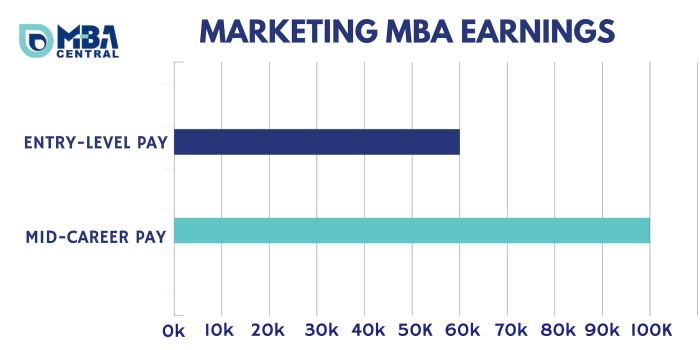
- Marketing: Emphasizes marketing strategies, consumer behavior, and brand management. Career paths include roles in brand management, digital marketing, and market research.
- Human Resources: Covers talent acquisition, employee relations, and organizational behavior. Graduates typically find roles in HR management, talent development, and compensation analysis.
- Operations Management: Focuses on supply chain management, production planning, and quality control. Career opportunities include operations manager, logistics coordinator, and procurement officer.
- Entrepreneurship: Prepares students for starting and managing their own businesses. Alumni often become entrepreneurs, business consultants, or venture capital analysts.
- Information Technology: Combines business management with technology. Graduates usually take on roles in IT management, data analysis, and systems development.
Career Paths Linked to MBA Specializations
The choice of MBA specialization significantly influences career trajectories. Each specialization opens unique doors to specific industries and roles, equipping graduates with targeted expertise. Here are some prominent career paths associated with different specializations:
- Finance: Positions such as financial analyst, investment banker, and CFO are common, often in high-stakes environments.
- Marketing: Graduates find themselves in roles like marketing manager, specialist, and advertising executive, driving brand success.
- Human Resources: Career options include HR director, recruitment specialist, and training manager, focusing on workforce optimization.
- Operations Management: Individuals may become supply chain managers, operations consultants, or project managers, enhancing operational efficiency.
- Entrepreneurship: Many graduates launch startups or take on roles as business strategists, fostering innovation.
- Information Technology: Roles such as IT project manager, business analyst, and data scientist are prevalent, bridging tech and business.
Benefits of General MBA versus Specialized MBA
Choosing between a general MBA and a specialized MBA can shape a professional’s career direction. A general MBA provides a broad understanding of business principles, preparing graduates for various roles across industries. In contrast, a specialized MBA delivers in-depth knowledge and expertise in a specific area, making graduates more competitive for niche positions.
A specialized MBA can enhance employability in targeted sectors by equipping students with industry-specific skills.
For instance, a finance specialization can lead to lucrative roles in investment banking that a general MBA might not prepare one for as thoroughly. Conversely, a general MBA can offer flexibility and adaptability, allowing for career shifts across different business functions.Ultimately, the decision should align with career goals, industry demands, and personal interests, ensuring that graduates are equipped to succeed in their chosen fields.
Fee Structures for MBA Programs: MBA Course Details And Fees
The cost of pursuing an MBA can vary widely depending on the institution, program format, and location. Understanding the fee structures is essential for prospective students to plan their finances effectively. This section provides a detailed breakdown of the typical costs associated with MBA programs, including tuition, materials, and additional expenses.
Typical Costs Associated With MBA Programs
The primary components of the fee structure for MBA programs generally include tuition fees, course materials, and other related expenses. Below is a detailed overview of typical costs:
| Cost Component | Description | Estimated Range (USD) |
|---|---|---|
| Tuition Fees | Cost of the MBA program per year or total duration. | 20,000 – 150,000 |
| Course Materials | Textbooks, software licenses, and other materials needed for coursework. | 1,000 – 5,000 |
| Application Fees | Fees charged by institutions for processing applications. | 50 – 300 |
| Student Fees | Mandatory fees covering student services and facilities. | 500 – 2,000 |
| Technology Fees | Charges for access to online resources and technological tools. | 200 – 1,000 |
This breakdown gives prospective students a comprehensive view of the major costs involved in obtaining an MBA. It is crucial to consider these expenses when evaluating the overall investment in education.
Comparison of MBA Program Fees
Different institutions and program formats can lead to significant variations in fees. The following table compares the average tuition fees for MBA programs across various institutions:
| Institution | Program Format | Tuition Fees (USD) |
|---|---|---|
| Harvard Business School | Full-time | 73,440 |
| Stanford Graduate School of Business | Full-time | 74,000 |
| Wharton School, University of Pennsylvania | Full-time | 84,000 |
| INSEAD | Full-time | 94,000 |
| University of Chicago Booth School of Business | Full-time | 73,440 |
This comparison illustrates the differences in fee structures among prestigious MBA programs, highlighting the importance of researching specific institutions for accurate financial planning.
Additional Costs for MBA Programs
In addition to tuition and materials, students should anticipate other expenses that can impact their overall budget. These can include:
Living Expenses
Costs for accommodation, food, transportation, and personal expenses vary significantly depending on the city and lifestyle. Students should budget approximately $15,000 to $30,000 annually for living expenses, depending on location.
Travel Expenses
For those enrolled in international programs or participating in exchange programs, travel costs can be substantial. Flights, accommodation, and daily expenses during travel should be factored into the budget, potentially adding an additional $2,000 to $5,000.
Internships and Networking Events
Costs associated with attending conferences, networking events, and internships, which can range from $500 to $3,000, depending on the frequency and location.Considering these additional costs is vital for a realistic financial assessment when pursuing an MBA.
Understanding the complete fee structure, including tuition, materials, and living expenses, is essential for prospective MBA students to make informed financial decisions.
Financial Aid and Scholarships
Pursuing an MBA can be a significant financial investment, but fortunately, there are various financial aid options and scholarships available to help students manage the costs. Understanding these options can make it easier to achieve your academic and professional goals without being overwhelmed by financial burdens.Financial aid for MBA students typically encompasses loans, grants, and scholarships. Loans are borrowed funds that must be repaid, often with interest, while grants are financial gifts that do not require repayment.
Scholarships are a form of financial aid awarded based on various criteria, including academic merit or financial need. Here’s a closer look at the different types of financial aid and scholarships available:
Types of Financial Aid
There are several forms of financial aid available to MBA students, each serving distinct purposes. Understanding these helps in making informed decisions about financing your education.
- Federal Student Loans: These are government-funded loans with lower interest rates and flexible repayment options. The two most common types are Direct Subsidized and Unsubsidized Loans.
- Private Loans: Offered by banks and credit unions, these loans often have higher interest rates and less flexible repayment terms compared to federal loans.
- Grants: Unlike loans, grants do not need to be repaid. They are often based on financial need and can assist in covering tuition costs.
Scholarships for MBA Candidates
Scholarships specifically designed for MBA candidates can significantly reduce the financial burden of graduate education. Many institutions and organizations offer scholarships based on academic performance, leadership qualities, or demographic factors.
- Merit-Based Scholarships: Awarded to students with outstanding academic records or high test scores. For example, business schools may offer scholarships for students with GMAT scores in the top percentile.
- Need-Based Scholarships: These scholarships are granted to students who demonstrate financial need as assessed by their school’s financial aid office.
- Diversity Scholarships: Aimed at promoting diversity within MBA programs, these scholarships support students from underrepresented backgrounds.
Application Processes for Financial Aid and Scholarships
Applying for financial aid and scholarships involves several steps, which can vary by institution. Understanding the general process can help streamline your application experience.To apply for financial aid, students typically need to complete the Free Application for Federal Student Aid (FAFSA). This form collects financial information to determine eligibility for federal loans and grants. For scholarships, the application may require students to submit:
- A completed scholarship application form, which may be available online or through the school’s financial aid office.
- Letters of recommendation, which can provide insights into the applicant’s character and achievements.
- Personal statements or essays that discuss the applicant’s goals, aspirations, and reasons for applying for the scholarship.
Timely submission of applications is crucial, as many scholarships have specific deadlines. It’s advisable to keep track of these dates and prepare the necessary documents in advance.
Return on Investment (ROI) of an MBA
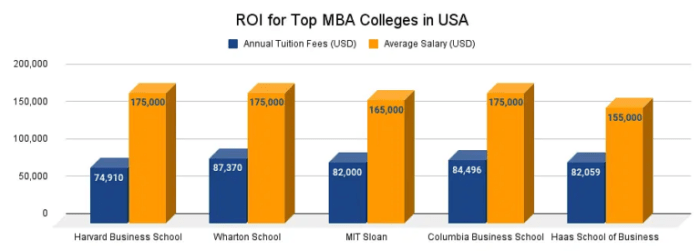
Obtaining an MBA can be a significant investment, both in terms of time and money. Understanding the return on investment (ROI) of your MBA can help prospective students evaluate the potential financial benefits against the costs involved. This analysis often encompasses aspects such as salary increases, career advancement, school reputation, and networking opportunities.The financial benefits of an MBA are often substantial, with many graduates seeing a considerable salary increase upon completion.
According to various studies, MBA graduates can expect a salary boost that ranges from 30% to over 100% of their pre-MBA salaries. This increase not only reflects the growth in earning potential but also the accelerated career paths that many MBA graduates experience.
Financial Comparison of Costs and Earnings
When considering the ROI of an MBA, it is essential to compare the costs of obtaining the degree against the potential earnings over time. The costs can include tuition fees, living expenses, and materials, which can range significantly based on the institution and location. To put this into perspective, here’s a breakdown of the typical costs and expected earnings:
- Typical Tuition Costs: Ranges from $30,000 to $120,000 depending on the program.
- Average Starting Salary for MBA Graduates: Approximately $100,000 to $150,000, depending on the region and industry.
- Payback Period: Many graduates find that they can recoup their investment within 4 to 6 years, particularly in high-demand fields.
By evaluating these figures, prospective students can assess whether the investment aligns with their career goals and financial situation.
Factors Influencing ROI of an MBA, MBA Course Details And Fees
Several factors can impact the ROI of an MBA, making it crucial for candidates to consider their options carefully.
- School Reputation: Graduating from a well-respected institution can open doors to better job opportunities and higher starting salaries.
- Networking Opportunities: An MBA program often provides access to a vast network of alumni and industry professionals, which can significantly enhance career prospects.
- Specialization: Certain specializations, such as finance or technology, tend to yield higher returns due to demand in specific sectors.
- Geographic Location: The location of the school and the job market can greatly affect salary potential and job placement rates.
Understanding these factors can help candidates make informed decisions about their MBA journey, ensuring that their investment leads to the desired outcomes and financial growth.
Online vs. Traditional MBA Programs
The rise of technology has significantly impacted education, leading many students to weigh the options between online and traditional MBA programs. Each format offers distinct advantages and challenges that can influence a prospective student’s decision based on their individual needs, career goals, and lifestyle preferences. Understanding the differences can help determine which path aligns better with one’s aspirations.Online MBA programs provide a flexible learning environment, allowing students to balance coursework with personal and professional commitments.
This format can be particularly beneficial for working professionals who may find it difficult to attend classes in person. On the other hand, traditional MBA programs often offer a more immersive experience, with face-to-face interactions that can enhance networking opportunities and classroom discussions.
Pros and Cons of Online and Traditional MBA Programs
Both online and traditional MBA programs come with their own sets of benefits and drawbacks. Here’s a breakdown of these aspects to help distinguish between the two:
Pros of Online MBA Programs
Flexibility
Students can learn at their own pace and schedule classes around their work and personal lives.
Accessibility
Geographic location is less of a barrier, allowing students from various regions to enroll in prestigious programs.
Cost-Effectiveness
Online programs may have lower overall costs due to reduced commuting and accommodation expenses.
Cons of Online MBA Programs
Limited Networking
Opportunities to connect and build relationships may be less frequent than in traditional settings.
Self-Motivation Required
Online students must possess strong time-management skills and discipline to stay on track.
Pros of Traditional MBA Programs
Networking Opportunities
Face-to-face interactions with peers, faculty, and industry professionals can lead to valuable connections and mentorships.
Structured Learning Environment
Scheduled classes can help students maintain focus and facilitate collaboration in real-time.
Cons of Traditional MBA Programs
Time Commitment
Fixed schedules can be challenging for working professionals, requiring them to potentially sacrifice job responsibilities or personal time.
Geographic Limitations
Students may need to relocate or commute, which can increase overall costs and complicate schedules.
Examples of Reputable Online MBA Programs
Several institutions offer well-regarded online MBA programs that boast unique features to enhance the learning experience. Here are a few notable examples:
University of North Carolina at Chapel Hill (Kenan-Flagler Business School)
Known for its rigorous curriculum and strong alumni network, this program offers a highly flexible online format that mirrors its on-campus experience.
Indiana University (Kelley School of Business)
Kelley’s online MBA is recognized for its comprehensive curriculum and innovative learning methods, including a blend of synchronous and asynchronous classes.
University of Southern California (Marshall School of Business)
Offers a flexible online MBA program focusing on leadership development and global business perspectives, with opportunities for cohort-based learning.
Comparison Table: Online vs. Traditional MBA Programs
The following table Artikels key differences between online and traditional MBA programs, focusing on structure, flexibility, and networking opportunities:
| Feature | Online MBA Programs | Traditional MBA Programs |
|---|---|---|
| Structure | Self-paced with asynchronous classes; may include synchronous sessions. | Fixed schedule with in-person classes and structured classroom interaction. |
| Flexibility | High; students can choose when to study and complete assignments. | Moderate; students must attend classes at specific times. |
| Networking Opportunities | Limited; primarily virtual interactions through online forums and video calls. | Extensive; direct interaction with peers, professors, and industry events. |
Global Perspective on MBA Education

Source: medium.com
MBA programs around the world are designed to cater to the unique cultural, economic, and educational contexts of their respective countries. As businesses operate on a global scale, the need for a diverse understanding of management practices and business strategies has never been more critical. This highlights the importance of gaining insights into how MBA education varies across different cultures and regions.The landscape of MBA education has evolved significantly, with many programs embracing a global perspective.
This is evident in the rise of international MBA programs, which attract students from various backgrounds seeking to enhance their business acumen while experiencing diverse cultures. The appeal of these programs lies in their emphasis on global networking, exposure to international markets, and the opportunity to learn from faculty with international experience.
Variation of MBA Programs Across Countries
MBA programs differ widely across various countries, influenced by local business practices, cultural norms, and academic traditions. The curriculum, teaching methodologies, and even the duration of the programs can vary significantly. For instance, in the United States, MBA programs often emphasize practical experience and case-based learning, with a strong focus on leadership and entrepreneurship. Programs typically last two years, allowing for internships and networking opportunities.
In contrast, European MBA programs may lean towards a more theoretical approach, with many being one year in duration. Key differences can be summarized as follows:
- United States: Focus on entrepreneurship, case studies, and leadership; typically two years.
- United Kingdom: More intensive one-year programs, often with a global perspective; emphasizes analytical skills.
- Asia: Rapidly growing market for MBA education, often integrating local business practices with global theories; diverse program lengths.
- Australia: Emphasis on a balanced approach of theory and practice, with strong industry links; usually one to two years.
Rise of International MBA Programs
The globalization of business has led to a significant increase in the number of international MBA programs. These programs are designed to attract students from around the world, providing a multicultural learning environment that prepares graduates for global careers.The appeal of international MBA programs includes:
- Diverse Networking Opportunities: Students can connect with peers from various countries, facilitating a broad professional network.
- Cross-Cultural Learning: Exposure to different business practices and cultural perspectives enriches the educational experience.
- Language Skills Development: Many programs offer courses in multiple languages, enhancing communication skills crucial for global business.
- Global Career Opportunities: Graduates are often more competitive in the job market due to their international experience.
Leading Institutions for MBA Programs
Several institutions worldwide are renowned for their exceptional MBA programs, known for their rigorous academic standards, experienced faculty, and extensive alumni networks. These institutions often rank highly in global MBA rankings and are sought after by international students.Some of the leading institutions include:
- Harvard Business School (USA): Known for its case study method and strong emphasis on leadership.
- INSEAD (France/Singapore): Offers a truly international experience with diverse campuses and a highly competitive program.
- London Business School (UK): Renowned for its strong connections to the finance industry and global alumni network.
- Wharton School, University of Pennsylvania (USA): Offers a comprehensive curriculum with a strong emphasis on finance and entrepreneurship.
- IE Business School (Spain): Focuses on innovation and entrepreneurship, with a strong international flavor.
The landscape of MBA education is continually evolving, influenced by global trends and the changing needs of businesses around the world. As students consider their options, understanding the global perspective on MBA education will empower them to make informed choices about their academic and professional futures.
Ending Remarks
Source: mbaandbeyond.com
As we wrap up our discussion on MBA Course Details And Fees, it’s clear that pursuing an MBA can be a pivotal step toward achieving your career aspirations. By weighing the costs and benefits, including potential returns on investment, financial aid options, and the choice between online and traditional programs, you are now better prepared to navigate this important educational journey.
Remember, investing in an MBA is not just about the fees; it’s about the future it can create.
Expert Answers
What is the average duration of an MBA program?
The average duration of a full-time MBA program is typically two years, while part-time and online programs may take three years or more, depending on the format and pace of study.
Are there any age restrictions for MBA applicants?
No, there are no specific age restrictions for MBA applicants, as programs typically welcome diverse candidates from various backgrounds and experiences.
Can I pursue an MBA while working full-time?
Yes, many MBA programs offer flexible schedules, such as part-time or online options, allowing students to balance their studies with full-time employment.
What is the importance of networking during an MBA?
Networking during an MBA is crucial as it helps you build valuable connections with peers, faculty, and industry professionals, ultimately enhancing career opportunities and growth.
What should I consider when choosing an MBA program?
When choosing an MBA program, consider factors such as the school’s reputation, specialization options, program format, location, faculty expertise, and potential return on investment.