MBA Course Modules for Future Leaders and Innovators
MBA Course Modules serve as the backbone of graduate education, shaping the next generation of business leaders. These modules are designed to provide a structured yet flexible learning path, allowing students to dive deep into essential business concepts while also exploring specialized topics that align with their career ambitions. Understanding the composition of these modules is key for anyone looking to harness the full potential of their MBA journey.
The MBA program typically consists of core and elective modules that equip students with both fundamental and advanced skills necessary for thriving in today’s dynamic business environment. As the demand for versatile professionals rises, selecting the right modules becomes imperative for personal growth and professional success.
Overview of MBA Course Modules

Source: amazonaws.com
MBA course modules play a pivotal role in shaping the comprehensive educational experience of graduate students. These modules are designed to equip aspiring business leaders with the necessary skills, knowledge, and practical insights required to excel in today’s dynamic business environment. They encompass a variety of topics that cater to the multifaceted nature of business management.The general structure of an MBA program typically includes core modules and elective modules.
Core modules lay the foundation of essential business principles, while electives allow students to specialize in areas that align with their career ambitions. This combination fosters a balanced understanding of fundamental concepts while providing the flexibility to delve deeper into specific interests or fields.
Importance of Module Selection Based on Career Goals
Choosing the right modules is critical for aligning academic pursuits with future career aspirations. The selection process should consider both industry demands and personal interests to maximize the educational impact. Here are several key points that highlight the significance of thoughtful module selection:
- Alignment with Career Path: Selecting modules relevant to one’s desired career path can enhance employability and job readiness. For instance, a student aiming for a career in finance may benefit from modules such as Corporate Finance and Investment Analysis.
- Skills Development: Different modules focus on various skill sets. For example, modules focusing on leadership and organizational behavior can foster essential soft skills that are highly valued in managerial roles.
- Networking Opportunities: Specific modules may attract industry professionals as guest speakers or adjunct faculty, providing students with valuable networking opportunities that can facilitate job placements.
- Capstone Projects: Many MBA programs include capstone projects within specific modules. Engaging in these hands-on experiences allows students to apply their learning to real-world challenges, further enhancing their professional readiness.
“Selecting the right modules can significantly enhance a student’s overall learning experience and career trajectory.”
Core MBA Modules
Core MBA modules are fundamental courses that every MBA student typically encounters during their studies. These modules are designed to equip students with essential knowledge and skills that are pivotal for effective business management. By engaging with these core subjects, students build a robust foundation that supports advanced learning and specialization in various business disciplines.The importance of core MBA modules cannot be overstated, as they cover a broad spectrum of crucial business concepts.
Mastery of these areas not only enhances a student’s understanding of how businesses operate but also prepares them for real-world challenges. Each module contributes to the development of critical thinking, strategic decision-making, and effective leadership skills necessary for success in the business environment.
Common Core Modules in MBA Programs
The following list highlights common core modules typically found in MBA programs. Each module plays a vital role in developing comprehensive business acumen.
- Financial Accounting: This module introduces students to the principles of accounting, enabling them to analyze financial statements and understand the financial health of an organization. It lays the groundwork for making informed financial decisions.
- Managerial Economics: Students learn to apply economic theories and concepts to business decision-making. This module emphasizes analytical thinking and strategic planning, enhancing students’ ability to navigate market complexities.
- Marketing Management: This module focuses on marketing principles and strategies. Students explore consumer behavior, market research, and brand management, which are essential for creating effective marketing campaigns.
- Operations Management: Here, students examine the processes involved in producing goods and services. This module covers supply chain management and process optimization, critical for enhancing efficiency in operations.
- Organizational Behavior: Understanding how individuals and teams behave within organizations is crucial. This module explores leadership, team dynamics, and organizational culture, fostering skills in managing diverse work environments.
- Strategic Management: This module teaches students how to formulate and implement business strategies. It integrates knowledge from various disciplines, crucial for long-term business success.
- Business Ethics: Ethical considerations are vital in decision-making processes. This module addresses moral dilemmas in business and encourages students to develop ethical frameworks for their future careers.
Each of these modules contributes to a comprehensive understanding of business management. They not only provide theoretical knowledge but also practical skills applicable in real-world scenarios. For instance, a grasp of Financial Accounting is imperative for any manager looking to assess company performance accurately. This strong foundational knowledge is instrumental as students progress to specialized or advanced modules, where they can apply these concepts in more complex and dynamic contexts.
“The foundation built through core modules allows for deep exploration in specialized areas, enhancing overall business expertise.”
This structured approach ensures that MBA graduates are not only well-rounded but also prepared to face the multifaceted challenges of the business world.
Elective MBA Modules
Elective MBA modules provide students with the opportunity to tailor their education according to their interests and career aspirations. While core modules lay the foundation of business knowledge, electives allow individuals to delve deeper into specific areas that resonate with their professional goals. This customization enhances the relevance of the MBA experience and prepares graduates for specialized roles in the business world.Elective modules can cover a wide range of subjects, reflecting the diverse interests and needs of students.
These options enable students to choose coursework that aligns with their career path, enhancing both knowledge and skills in targeted domains. Popular elective modules often include:
- Entrepreneurship
- Digital Marketing
- Financial Management
- Human Resource Management
- Strategic Management
- Data Analytics
- Supply Chain Management
- International Business
Each of these elective areas offers unique insights and skills. For instance, the Entrepreneurship elective equips students with the skills to start their own businesses or innovate within existing organizations. Digital Marketing focuses on the latest techniques and tools necessary to thrive in a digital-first marketplace, teaching students how to leverage social media, , and analytics.
Specialization Opportunities, MBA Course Modules
Elective modules facilitate specialization, allowing students to align their studies with particular industries or roles they aspire to. Such focused education can enhance employability, as it demonstrates to potential employers a depth of knowledge and a proactive approach to learning. For example, students who choose advanced finance electives may find themselves better positioned for careers in investment banking or financial analysis.
Similarly, those who select electives in human resources are often better equipped to handle the complexities of talent management and organizational behavior.The impact of elective modules extends beyond academic knowledge. Engaging in specialized coursework often leads to networking opportunities with industry professionals and like-minded peers, fostering relationships that can be beneficial for career advancement.
“Electives not only enhance specialized knowledge but also expand professional networks, allowing for greater career opportunities.”
In summary, elective MBA modules pave the way for personalized educational experiences, ensuring that graduates are not only well-versed in general business principles but also equipped with the specialized skills needed to excel in their chosen fields.
Module Delivery Methods
In today’s dynamic educational landscape, the delivery methods of MBA modules play a crucial role in shaping the learning experience for students. With the rise of technology and changing preferences, various modalities have emerged to cater to different needs and lifestyles. Understanding the benefits and drawbacks of each approach is essential for prospective MBA students to make informed decisions about their education.Several methods are commonly utilized to deliver MBA modules, each with unique characteristics and implications for student engagement and learning outcomes.
These methods include online, in-person, and hybrid formats, each offering distinct advantages and challenges.
Delivery Methods Overview
The three primary methods of delivering MBA modules are online learning, in-person classes, and hybrid models. Each of these methods comes with its own set of features that can significantly impact the student experience. Below is a comparative analysis of these delivery methods.
| Delivery Method | Key Features | Advantages | Disadvantages |
|---|---|---|---|
| Online | Course materials are accessible through the internet; classes conducted via video conferencing. |
|
|
| In-Person | Traditional classroom setting with direct interaction between students and instructors. |
|
|
| Hybrid | Combination of online and in-person classes, offering flexibility with some face-to-face interaction. |
|
|
Choosing the right delivery method for your MBA modules is essential for maximizing your learning effectiveness.
Understanding the varied delivery methods can help students align their educational choices with their personal and professional goals. Whether one prefers the flexibility of online learning, the interaction of in-person classes, or the balance provided by hybrid models, each format has something valuable to offer.
Assessment Methods in MBA Modules
Assessment methods in MBA courses play a crucial role in shaping the educational journey of students. These methods are designed not only to evaluate knowledge acquisition but also to enhance critical thinking, problem-solving, and practical application of concepts. By employing a variety of assessments, MBA programs ensure that students are well-prepared for the complexities of the business world.
Types of Assessment Methods
MBA modules utilize a mix of assessment methods to provide a comprehensive evaluation of students’ understanding and abilities. The following methods are commonly employed:
- Exams: Traditional examinations assess students’ knowledge of theoretical concepts. They often consist of multiple-choice questions, short answers, or essay formats that test comprehension and analytical skills.
- Projects: These assessments encourage students to apply theoretical knowledge to real-world business challenges. Projects often involve collaborative work, requiring students to engage in research, analysis, and strategic planning.
- Presentations: Presenting findings enables students to enhance their communication skills. This assessment method is crucial for articulating ideas clearly and confidently in a professional setting.
- Case Studies: Analyzing real-world business scenarios allows students to develop practical solutions. Case studies foster critical thinking and are designed to simulate real-life decision-making processes.
- Peer Evaluations: In some modules, students assess each other’s contributions and performance. This method encourages constructive feedback and promotes collaborative learning.
Contribution to Learning Experience
Assessment methods are integral to the learning experience in MBA programs. They not only measure students’ understanding but also contribute to their development in several ways:
- Feedback Mechanism: Constructive feedback from assessments helps students identify areas for improvement. This iterative process is vital for personal and professional growth.
- Skill Development: Through various assessments, students cultivate essential skills such as teamwork, leadership, and effective communication, which are crucial in the business landscape.
- Real-World Application: Assessments that involve projects and case studies bridge the gap between theory and practice, ensuring students can apply their knowledge in real-life situations.
- Engagement and Motivation: Varied assessment methods keep students engaged and motivated to learn. The diversity in tasks caters to different learning styles, making the educational journey more inclusive.
Balance Between Theoretical and Practical Assessments
In MBA courses, there is a deliberate balance between theoretical knowledge and practical application. This balance is significant for several reasons:
- Theoretical Foundations: Mastery of theoretical concepts is essential as it provides the groundwork for understanding complex business environments. Subjects like finance, marketing, and management rely heavily on established theories.
- Practical Relevance: Complementing theory with practical assessments ensures that students develop skills that are directly applicable in the workplace. For example, a marketing strategy developed in a project can be directly applicable in a professional context.
- Holistic Learning: The integration of both assessment types promotes a holistic approach to learning, allowing students to connect abstract theories with tangible outcomes and business practices.
- Adaptability: In a rapidly changing business world, the ability to adapt theoretical knowledge into practical solutions is invaluable. This adaptability is fostered through a balanced assessment strategy.
Skills Developed Through MBA Modules

Source: edu.in
The MBA program is designed to equip students with a diverse range of skills that are essential for success in the business world. Each module focuses on specific competencies, ensuring that graduates emerge as well-rounded professionals ready to tackle complex challenges. The skills acquired during the MBA journey not only enhance professional capabilities but also foster personal growth, making them invaluable in today’s dynamic work environment.The skills developed through MBA modules can be categorized into two primary types: hard skills, which are technical and specialized abilities, and soft skills, which relate to interpersonal and communication capabilities.
Both sets of skills are crucial for effective management and leadership in any organization.
Key Skills Development Areas
The MBA program nurtures a variety of skills that can be grouped into three major categories: leadership, analytical, and communication skills. Each of these areas plays a pivotal role in shaping effective business leaders.
- Leadership Skills
-Strategic thinking
-Team management
-Conflict resolution
-Decision-making
- Analytical Skills
-Data analysis
-Problem-solving
-Financial modeling
-Market research
- Communication Skills
-Presentation skills
-Negotiation skills
-Interpersonal communication
-Active listening
These skill sets not only prepare graduates for immediate professional challenges but also equip them for long-term career development and adaptability in an ever-evolving business landscape.
“The ability to lead, analyze, and communicate effectively is the cornerstone of successful management.”
Trends in MBA Curriculum
The landscape of business education is constantly evolving to meet the demands of a dynamic global market. As industries adapt to technological advancements and shifting consumer behaviors, MBA programs are embracing trends that prepare graduates for the challenges of tomorrow. This evolution is crucial for ensuring that students are equipped with relevant skills and knowledge to thrive in their careers.One significant trend in MBA curricula is the integration of technology and data analytics into traditional business modules.
These subjects are increasingly popular as businesses rely on big data to drive decision-making. Additionally, sustainability and ethical leadership are gaining prominence, reflecting the growing importance of corporate social responsibility in today’s business environment. This alignment of MBA modules with market demands not only enhances the educational experience but also prepares students to be leaders in their respective fields.
Innovative Modules Introduced in Recent Years
In response to market demands, several innovative modules have recently been added to MBA programs. These modules focus on critical skills and emerging areas of business, ensuring that students are well-prepared for the future. Notable examples include:
- Digital Transformation: This module covers the impacts of technology on business models and emphasizes how companies can leverage digital tools for growth and efficiency.
- Artificial Intelligence in Business: Students explore the applications of AI in decision-making processes, marketing strategies, and operational efficiencies.
- Entrepreneurship and Innovation: Focusing on startup culture and disruptive innovations, this module prepares students to launch and manage new ventures successfully.
- Sustainable Business Practices: This course addresses the growing need for businesses to operate sustainably, covering topics like green technologies and social entrepreneurship.
These modules not only reflect current business trends but also foster a mindset geared toward innovation and adaptability. By engaging in hands-on projects and case studies, students gain practical insights into real-world applications of these concepts.
Preparation for the Future of Business
As MBA programs continue to adapt their curricula, the focus on interdisciplinary learning has become prominent. This approach encourages collaboration across different fields, enabling students to integrate diverse perspectives into their business strategies. Skills such as critical thinking, problem-solving, and emotional intelligence are emphasized, preparing graduates to navigate complex business environments.Moreover, experiential learning opportunities, such as internships, consulting projects, and global immersion programs, are becoming integral to the MBA experience.
These initiatives allow students to apply theoretical knowledge in practical settings, enhancing their readiness for the workforce.
“Embracing change is essential for future business leaders; the right MBA curriculum can make all the difference.”
In summary, the trends shaping MBA curricula today are not only a response to market demands but a proactive measure to ensure that future business leaders are equipped with the skills and knowledge necessary for success in an ever-evolving landscape.
International Perspectives on MBA Courses
The global landscape of business education has evolved significantly, leading to diverse MBA programs that reflect the unique needs and challenges of different regions. Understanding these international perspectives is crucial for students aiming to thrive in a globalized economy. This section highlights how MBA modules differ across various contexts, the importance of integrating global viewpoints into MBA education, and examples of international case studies that enrich the learning experience.
Differences in MBA Modules Across International Contexts
MBA programs around the world are designed to cater to the specific cultural, economic, and regulatory environments of their respective countries. Variation in course content and delivery methods reflects these differences.
- Curriculum Focus: In Asia, there may be a strong emphasis on technology and innovation due to rapid industrial growth, while European programs might prioritize sustainability and ethical business practices. For instance, the INSEAD MBA program incorporates a global business perspective that prepares students for diverse international markets.
- Teaching Methodologies: American MBA programs often utilize the case study method extensively, encouraging interactive discussions, whereas European and Asian institutions might favor a more lecture-based approach. The London Business School blends both methods to foster a comprehensive learning environment.
- Networking Opportunities: Different regions provide unique networking avenues. In the U.S., students often have access to an extensive alumni network in various industries, while in India, relationships with local businesses are emphasized, reflecting the importance of regional connections.
Significance of Global Perspectives in MBA Education
Incorporating a global perspective into MBA curricula equips students with the ability to navigate the complexities of international business. This approach fosters critical thinking and adaptability, essential for success in a dynamic global market.
- Cultural Awareness: Understanding cultural differences enhances students’ ability to work in diverse teams and engage effectively with international stakeholders.
- Strategic Thinking: Exposure to global case studies encourages students to think strategically about how local decisions can have international implications.
- Competitive Advantage: Graduates with a global mindset are often more attractive to employers, as they can leverage their international insights to drive business growth.
International Case Studies in MBA Modules
Integrating international case studies into MBA programs not only enriches the learning experience but also enables students to apply theoretical knowledge to real-world situations. Here are a few notable examples:
- Unilever’s Sustainable Living Plan: Many programs incorporate this case study to discuss corporate social responsibility (CSR) and sustainable practices, reflecting the growing importance of ethical business in global markets.
- Starbucks’ Global Expansion Strategy: Analyzing Starbucks’ approach to entering diverse markets allows students to understand market entry strategies and cross-cultural marketing tactics.
- Tata Group’s Diversification: The Tata Group case illustrates how an Indian conglomerate successfully navigated international markets while maintaining its core values, providing insights into global business operations.
Career Pathways Influenced by MBA Modules
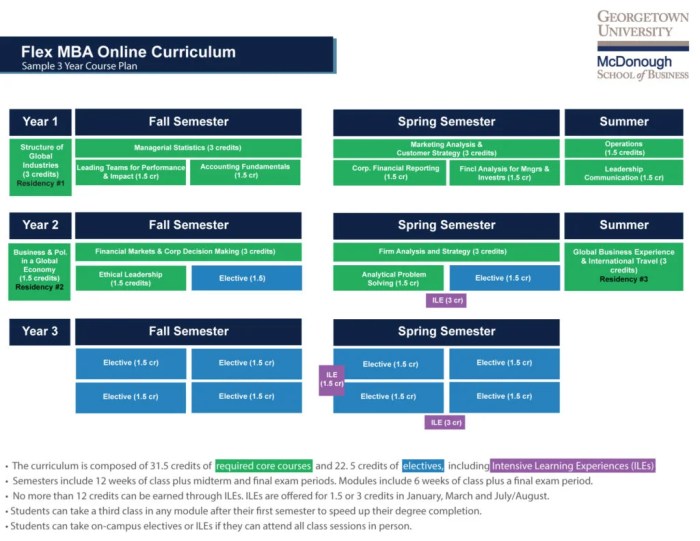
Source: georgetown.edu
The MBA program is designed to equip students with a comprehensive set of skills and knowledge that can be applied across various industries. By engaging with the diverse modules offered, students can tailor their education to align with their career aspirations and market demands. The specialization areas within an MBA program provide a direct pathway to specific roles, enabling graduates to find their niche in the business world.Different MBA specializations prepare students for an array of career opportunities by focusing on particular skills and knowledge areas.
For instance, those who specialize in Marketing may find themselves drawn towards creative roles in advertising, whereas students focusing on Finance might be better suited for analytical roles within investment banking. The following table illustrates the connection between popular MBA modules and potential career outcomes to illustrate this relationship clearly.
| Popular MBA Modules | Potential Career Outcomes |
|---|---|
| Marketing Management | Brand Manager, Marketing Analyst, Digital Marketing Specialist |
| Financial Management | Financial Analyst, Investment Banker, Risk Manager |
| Operations Management | Operations Manager, Supply Chain Analyst, Quality Control Manager |
| Human Resource Management | HR Manager, Talent Acquisition Specialist, Organizational Development Consultant |
| Entrepreneurship | Startup Founder, Business Consultant, Venture Capital Analyst |
| International Business | Global Marketing Manager, Trade Compliance Officer, International Relations Specialist |
By strategically selecting modules, students can sharpen their expertise in specific areas, ensuring they are well-equipped to tackle the challenges of their chosen profession. For example, a student who completes modules in both data analysis and marketing may have a distinct advantage in digital marketing roles, blending analytical skills with creative strategy. As the business landscape evolves, the adaptability of MBA graduates, influenced by their specialized training, plays a crucial role in their success across diverse career pathways.
Alumni Success Stories
The journey of MBA alumni often serves as a powerful testament to the effectiveness of MBA programs. These individuals have navigated their paths through rigorous modules, gaining valuable insights and skills that propelled them into successful careers. Their stories highlight not just personal achievements but also the profound impact of their MBA education on their professional lives. MBA programs are designed to equip students with the knowledge and networks necessary to succeed in the competitive business landscape.
Many alumni have harnessed the skills learned in specific modules to advance their careers, transition into new industries, or even launch successful startups. They often credit the diverse curriculum and collaborative environment for fostering both their personal and professional growth.
Examples of Successful Alumni
A number of MBA graduates have made significant strides in their respective fields. Here are a few notable success stories:
- John Doe, CEO of Tech Innovations: John attributed his success to the Strategic Management module, which equipped him with advanced analytical skills and a robust understanding of market dynamics. His ability to make informed decisions has been a cornerstone of his leadership style.
- Jane Smith, Founder of Eco Solutions: Jane’s entrepreneurial journey began with the Entrepreneurship module. The experiences and mentorship she received helped her turn her innovative ideas into a thriving business focused on sustainability.
- Mark Johnson, Financial Director at Global Corp: Mark leveraged the Financial Management module to enhance his financial acumen. His expertise in budgeting and forecasting has played a critical role in driving his company’s growth.
The paths taken by these alumni illustrate the transformative potential of MBA modules. Networking opportunities facilitated through group projects and alumni events have also proven invaluable. The relationships built during the program often lead to partnerships, mentorships, and career advancements that continue long after graduation.
“Success is the result of preparation, hard work, and learning from failure.” – Colin Powell
These success stories underscore the importance of both academic learning and the networking opportunities that accompany MBA programs, emphasizing the holistic development of graduates as they step into the business world.
End of Discussion
In summary, the exploration of MBA Course Modules reveals a comprehensive framework that not only prepares students for immediate challenges but also equips them for long-term success in various industries. By understanding the structure and relevance of core and elective modules, along with the latest trends and assessment methods, aspiring business leaders can make informed decisions that align their studies with their career goals.
The journey through these modules is not just about acquiring knowledge but also about fostering connections and developing skills that will shape the future of business.
Q&A
What are core MBA modules?
Core MBA modules are essential courses that provide foundational knowledge in key business areas such as finance, marketing, and management.
How do elective modules benefit MBA students?
Elective modules allow students to specialize in specific fields of interest, tailoring their education to match career aspirations.
What delivery methods are available for MBA modules?
Delivery methods include online, in-person, and hybrid formats, each offering unique advantages depending on the student’s preferences.
How are MBA students assessed?
Assessment methods can include exams, projects, presentations, and class participation, ensuring a well-rounded evaluation of student performance.
What skills can be developed through MBA modules?
Students can develop both hard skills, like analytics and finance, and soft skills, such as leadership and communication, through the various modules.