MBA Degree Benefits Unveiling Career and Financial Gains
MBA Degree Benefits provide a powerful foundation for those seeking to elevate their careers and enhance their earning potential. As the business landscape continues to evolve, an MBA has become more than just a degree; it’s a strategic investment in one’s future. This degree equips individuals with essential skills, networking opportunities, and a comprehensive understanding of global business dynamics that can significantly impact their professional journeys.
From the soft skills gained through collaborative projects to the hard skills learned in finance and marketing, MBA programs are designed to prepare graduates for the complexities of modern business. Furthermore, many programs offer specialization options that cater to various industries, allowing students to tailor their education to fit their career aspirations. In this discussion, we will explore the multifaceted advantages of pursuing an MBA and how they contribute to both personal and professional growth.
Overview of MBA Degree Benefits

Source: eccceg.com
An MBA degree opens the door to a multitude of opportunities in the business world, creating a pathway for personal and professional development. Whether one is looking to elevate their current career or pivot into a new field, an MBA provides the necessary tools to excel in various business environments. The increasing demand for qualified business leaders underscores the significance of obtaining this esteemed degree.
The primary advantages of pursuing an MBA include enhanced knowledge, improved leadership skills, and expanded networking opportunities. Graduates typically gain a comprehensive understanding of business principles, which can be applied across various industries. Furthermore, statistics indicate that individuals with an MBA can experience a substantial increase in their earning potential. According to the Graduate Management Admission Council (GMAC), MBA graduates earn almost 75% more than those with only a bachelor’s degree, demonstrating the financial benefits associated with advanced education.
Employers increasingly view an MBA as a mark of commitment and expertise, which can significantly enhance career advancement opportunities.
Impact on Earning Potential
The correlation between an MBA degree and earning potential is notable and widely documented. Many studies highlight the financial benefits of obtaining this qualification. For instance, GMAC reports that the median starting salary for MBA graduates is approximately $115,000, which is significantly higher than the $65,000 median salary for bachelor’s degree holders. This substantial difference illustrates the return on investment that an MBA can provide.
Additionally, many alumni report that their salaries increase over time, further emphasizing the long-term financial advantages of this degree.
In summary, the financial impact of an MBA can be broken down into key statistics:
- The average annual salary for MBA graduates is significantly higher than that of non-MBA holders.
- Many MBA graduates secure leadership positions within three to five years of completing their degree.
- Companies often offer signing bonuses to MBA graduates, enhancing their overall compensation package.
Career Advancement Opportunities
An MBA not only enhances earning potential but also significantly expands career advancement opportunities. Graduates often find themselves in leadership roles, with the skills and knowledge to drive business strategy and innovation. The program cultivates critical thinking, strategic planning, and effective communication skills that are vital in today’s competitive job market.
The value of an MBA is evident in the types of positions and industries that graduates frequently enter:
- Consulting – Many MBA graduates pursue careers in top consulting firms, where they can leverage their strategic insights to help businesses grow.
- Finance – A strong foundation in finance is often a key focus of MBA programs, leading graduates to lucrative roles in investment banking and financial analysis.
- Entrepreneurship – Some graduates opt to start their own businesses, utilizing the entrepreneurial skills and networks gained during their studies.
The significance of an MBA is illustrated not only by the salary increases but also by the quality of roles available to graduates. Many find that the network established during their MBA program provides ongoing benefits throughout their careers, opening doors to opportunities that may have otherwise remained inaccessible.
“An MBA is more than just a degree; it’s a transformative experience that shapes your career and enhances your earning potential.”
Skill Development through an MBA

Source: ac.in
An MBA program is designed not just to impart knowledge but also to foster a wide array of skills that are critical in today’s competitive job market. These skills range from analytical thinking to leadership capabilities, making MBA graduates highly sought after by employers across various industries. The overall goal of skill development in an MBA is to equip students with the tools necessary to navigate complex business environments effectively.The key skills acquired during an MBA program not only enhance employability but also prepare graduates for real-world challenges.
Different programs may emphasize various skill sets based on their unique focus areas, such as finance, marketing, or entrepreneurship. For instance, a finance-focused MBA may delve deeper into quantitative skills, whereas a program concentrated on entrepreneurship may prioritize creativity and innovation. This diversity allows students to tailor their learning experiences to align with their career aspirations.
Soft Skills and Hard Skills Developed through an MBA
The skill set gained from an MBA program can be broadly categorized into soft skills and hard skills. Understanding these distinctions is essential, as both types of skills contribute to a candidate’s overall employability and effectiveness in the workplace.Soft skills refer to interpersonal attributes that enable someone to interact effectively and harmoniously with others. Hard skills, on the other hand, are specific, teachable abilities that can be defined and measured.
Below is a table outlining the soft and hard skills typically developed in an MBA program:
| Soft Skills | Hard Skills |
|---|---|
| Leadership | Financial Analysis |
| Communication | Data Management |
| Teamwork | Strategic Planning |
| Problem-Solving | Market Research |
| Adaptability | Project Management |
Each of these skills is critical in enhancing a graduate’s ability to contribute effectively to an organization. For example, strong leadership skills enable individuals to motivate and guide teams, while financial analysis skills allow them to make informed business decisions.
“The combination of soft and hard skills creates a well-rounded professional capable of meeting the diverse demands of the business world.”
MBA programs may vary in their focus, which influences the specific skills emphasized in their curricula. For instance, programs that incorporate case studies and real-world projects tend to enhance practical skills more than those that focus primarily on theoretical frameworks. Ultimately, the skills developed during an MBA are invaluable assets that can significantly influence a graduate’s career trajectory.
Networking Opportunities
Networking is a crucial part of the MBA experience that can significantly enhance a student’s career trajectory. Through interactions with peers, faculty, and industry leaders, MBA students have the unique opportunity to build relationships that can last a lifetime. These connections often lead to job opportunities, collaborations, and valuable insights into various industries, making networking an indispensable aspect of the MBA journey.Alumni networks play a vital role in providing current MBA students with access to a wealth of resources and support.
Many schools have strong alumni associations that facilitate connections through events, mentorship programs, and online platforms. For instance, an alumni network may offer exclusive job postings to graduating students or provide opportunities for informational interviews with seasoned professionals. Such connections can lead to internships and job placements, giving students a significant advantage in a competitive job market.
Networking Strategies for MBA Students, MBA Degree Benefits
To maximize the benefits of networking during an MBA program, students should consider implementing various strategies. The following points are essential for effective networking:
- Attend networking events and conferences: Engaging in industry-specific gatherings allows students to meet professionals and fellow students, broadening their network.
- Utilize social media platforms: Sites like LinkedIn are powerful tools for connecting with alumni and industry leaders, enabling students to showcase their skills and expand their reach.
- Participate in networking workshops: Many MBA programs offer workshops that teach effective networking skills and strategies, which are crucial for building strong professional relationships.
- Engage in group projects: Collaborative coursework provides an excellent opportunity to bond with classmates and cultivate connections that may lead to future partnerships.
- Join student organizations and clubs: Involvement in these groups allows students to meet peers with similar interests and provides access to industry events and guest speakers.
- Seek mentorship opportunities: Connecting with alumni or faculty for mentorship can provide guidance and open doors to valuable contacts in various fields.
Specializations in MBA Programs
MBA programs offer a variety of specializations tailored to meet the evolving demands of the global job market. These specializations allow students to dive deeper into specific areas of interest, enhancing their expertise and career prospects. With industries becoming more niche, selecting the right specialization can significantly impact one’s career trajectory and job market competitiveness.The choice of specialization can set candidates apart in a crowded job market, equipping them with specialized knowledge and skills that employers often seek.
Popular MBA specializations include Finance, Marketing, Human Resources, Information Technology, and Operations Management. Each of these areas not only provides distinct skill sets but also opens doors to various industries and roles, making it crucial for students to align their academic focus with their career aspirations.
Popular MBA Specializations and Career Benefits
Understanding the benefits of various MBA specializations can help prospective students make informed decisions. Below is a detailed overview of some popular MBA specializations and the career benefits associated with each.
- Finance: Specializing in finance equips graduates with skills in financial analysis, investment management, and corporate finance. Career paths can include roles as financial analysts, investment bankers, or financial managers in sectors ranging from banking to corporate finance.
- Marketing: An MBA in marketing focuses on brand management, consumer behavior, and digital marketing strategies. This specialization prepares graduates for roles such as marketing managers, brand strategists, and digital marketing specialists across various industries.
- Human Resources: A specialization in human resources develops expertise in talent management, organizational behavior, and employment law. Graduates can pursue careers as HR managers, talent acquisition specialists, or organizational development consultants in any organization.
- Information Technology: This specialization combines business acumen with technical skills, focusing on IT management, data analytics, and cybersecurity. It leads to careers as IT managers, data analysts, or technology consultants in tech firms and other industries.
- Operations Management: Students focusing on operations management learn about supply chain management, logistics, and process optimization. This specialization prepares them for roles such as operations managers, supply chain analysts, and production managers in manufacturing or service industries.
The impact of choosing a specialization extends beyond personal interest; it can significantly influence job market competitiveness. Employers often look for candidates with a tailored skill set that matches their specific needs. Thus, aligning one’s MBA specialization with industry trends can enhance employability and career growth.
Comparison of Various Specializations and Corresponding Industries
To illustrate how different MBA specializations correlate with various industries, the following table presents a comparison of popular specializations and the industries where graduates can thrive.
| Specialization | Key Skills Acquired | Industries |
|---|---|---|
| Finance | Financial analysis, investment strategies, risk management | Banking, investment firms, corporate finance |
| Marketing | Market research, branding, digital marketing | Consumer goods, technology, advertising |
| Human Resources | Talent management, employee relations, performance management | All sectors, including corporate, non-profit, and government |
| Information Technology | Data management, IT strategy, cybersecurity | Technology, finance, healthcare |
| Operations Management | Process optimization, supply chain management, project management | Manufacturing, logistics, consultancy |
The decision to specialize in a specific area not only enhances one’s expertise but also provides a competitive edge in the job market. Understanding the interplay between specialization and industry demand is crucial for aspiring MBA graduates looking to carve out a successful career path.
Global Perspective and Diversity
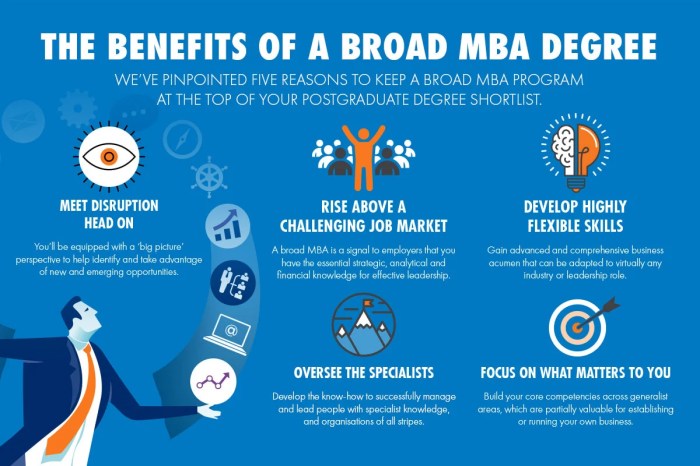
Source: edu.au
An MBA program profoundly enhances students’ understanding of global business dynamics and promotes diversity. As the business world becomes increasingly interconnected, the ability to navigate different cultural landscapes is essential for future leaders. An MBA provides a platform where students can gain insights into international markets and learn from varied perspectives, ultimately preparing them for challenges in a diverse workplace.An essential component of MBA programs is their focus on global business practices and diversity.
The curriculum often incorporates case studies from various countries, allowing students to analyze real-world scenarios that reflect the complexities of the global market. This exposure not only enriches classroom discussions but also deepens students’ understanding of how cultural nuances influence business operations.
Incorporating International Case Studies
To effectively integrate international case studies into MBA curricula, educational institutions follow several structured procedures. These procedures ensure that students are well-equipped to tackle global business challenges. First, selecting relevant case studies is crucial. Schools often curate a collection of diverse case studies that cover various industries and regions. This selection allows students to engage with different market dynamics and strategies.Next, faculty members are trained to facilitate discussions around these case studies, encouraging students to present their insights and solutions.
This collaborative learning environment fosters critical thinking and enhances the students’ ability to analyze global issues.Additionally, many programs invite guest speakers from different countries to share their experiences and insights. These interactions provide students with firsthand knowledge of international business practices, bridging theory with real-life applications.Finally, students are encouraged to work on group projects that involve team members from different backgrounds.
This diversity within teams allows students to experience different viewpoints and approaches to problem-solving, which is invaluable in today’s globalized business environment.
“Embracing diversity and a global perspective not only enhances learning but also prepares future leaders for the complexities of international business.”
Entrepreneurial Skills and Opportunities
The pursuit of an MBA degree offers a fertile ground for aspiring entrepreneurs, providing them with the vital skills, knowledge, and resources needed to navigate the challenging landscape of business ownership. With a focus on innovation, strategic thinking, and practical application, MBA programs equip students to transform ideas into successful ventures. Successfully launching a business requires not only a great idea but also the understanding of market dynamics, financial management, and leadership.
MBA programs foster these competencies through specialized courses, real-world projects, and exposure to business leaders. Many graduates find themselves inspired by their education to take the plunge into entrepreneurship, creating impactful businesses across various industries.
Success Stories of MBA Graduates
Countless MBA graduates have turned their academic knowledge into entrepreneurial success stories. For instance, Howard Schultz, the former CEO of Starbucks, leveraged his MBA insights to transform a small coffee shop into a global coffee empire. Another notable example is Sara Blakely, who founded Spanx and has become one of the youngest self-made female billionaires. These stories illustrate the potential of combining academic training with entrepreneurial spirit, demonstrating that an MBA can be a powerful catalyst for innovation and business success.
Entrepreneurial Skills Developed in MBA Programs
The curriculum of an MBA program is designed to cultivate a range of entrepreneurial skills that are crucial for building and sustaining a business. Here’s a list of some key skills developed through MBA coursework:
- Strategic Planning: Understanding how to create actionable business plans that align with long-term goals.
- Financial Acumen: Gaining proficiency in financial analysis, budgeting, and fundraising.
- Marketing Insights: Learning to identify target markets and develop effective marketing strategies.
- Leadership Development: Enhancing skills in team management, motivation, and conflict resolution.
- Innovation and Creativity: Encouraging out-of-the-box thinking to generate new ideas and solutions.
- Risk Management: Equipping students to evaluate potential risks and make informed decisions.
- Networking: Building connections with industry professionals, mentors, and fellow entrepreneurs.
- Operational Efficiency: Understanding how to streamline business operations for maximum productivity.
These skills and experiences enable graduates to approach entrepreneurship with confidence, making them more resilient and adaptable in a fast-paced business environment.
Return on Investment (ROI) of an MBA
Pursuing an MBA is often seen as a significant financial investment, and understanding the return on investment (ROI) is crucial for prospective students. The ROI of an MBA is not just about immediate salary increases, but it also encompasses career advancement, skill enhancement, and long-term financial benefits that can accrue over one’s career.The financial ROI of an MBA can vary widely based on several factors, including the reputation of the business school, the industry in which one works, and the individual’s career trajectory.
Graduates from top-tier schools often command significantly higher salaries compared to those from less prestigious institutions. This disparity often reflects the network and opportunities provided by these programs, ultimately influencing long-term earning potential.
Factors Influencing ROI
Multiple elements can affect the ROI one can expect after completing an MBA program. Understanding these factors helps potential students gauge their investment more accurately.
- School Reputation: Graduating from a highly regarded institution can lead to better job offers and higher salaries. Employers often associate these schools with high-quality education and skilled graduates.
- Industry: Certain industries, such as finance and consulting, typically offer higher salaries for MBA graduates compared to other sectors. The choice of industry can significantly impact ROI.
- Geographic Location: The region where one chooses to work after graduation can influence salary levels. Major cities often provide higher salaries due to the cost of living and demand for skilled professionals.
- Networking Opportunities: The connections made during an MBA program can lead to job offers and career advancements that directly impact ROI.
- Specialization: Focusing on a high-demand area, such as data analytics or healthcare management, can enhance one’s employability and salary potential.
Salary Increases Post-MBA
Examining potential salary increases in various fields provides insight into the tangible benefits of an MBA. The following table illustrates average salary ranges for professionals before and after obtaining their MBA across different sectors:
| Field | Average Salary Before MBA | Average Salary After MBA | Percentage Increase |
|---|---|---|---|
| Finance | $70,000 | $120,000 | 71% |
| Consulting | $80,000 | $130,000 | 63% |
| Marketing | $65,000 | $100,000 | 54% |
| Healthcare Management | $75,000 | $110,000 | 47% |
| Technology | $85,000 | $125,000 | 47% |
The decision to pursue an MBA should be based on a careful analysis of both personal and financial factors to ensure a worthy return on investment.
Conclusion: MBA Degree Benefits
In conclusion, the MBA Degree Benefits extend far beyond the classroom, offering graduates a wealth of opportunities for career advancement, skill enhancement, and valuable networking connections. By investing in an MBA, individuals position themselves favorably in the competitive job market while also increasing their potential for financial rewards. As we have seen, the decision to pursue an MBA is not just about obtaining a degree; it’s about shaping a future filled with possibilities and success.
FAQ Summary
What is the average salary increase after obtaining an MBA?
On average, MBA graduates can expect a salary increase of 50-100% compared to their pre-MBA earnings, depending on the industry and location.
How long does it typically take to complete an MBA program?
Most full-time MBA programs take about two years to complete, while part-time programs can take three to four years.
Are online MBA programs considered credible?
Yes, many accredited online MBA programs are recognized and respected in the business world, provided they come from reputable institutions.
Can an MBA help with entrepreneurship?
Absolutely, an MBA program often includes courses on entrepreneurship, helping students develop the necessary skills and mindset to start their own businesses.
Is prior work experience required for MBA programs?
While not always required, most MBA programs prefer candidates with some work experience, as it enhances classroom discussions and networking opportunities.